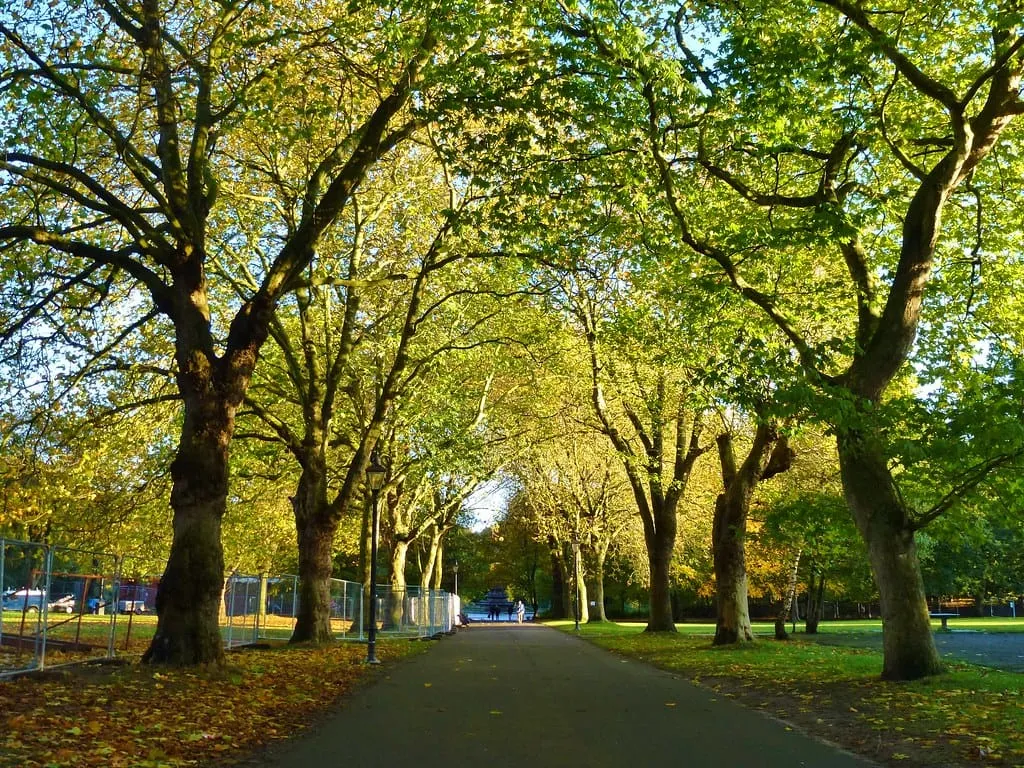
Liverpool Parks: What You'll Find at Sefton, Calderstones, Stanley Park and More
Compare Liverpool parks including Sefton, Calderstones, Stanley, Princes and Newsham, with walks, playgrounds, facilities, history and practical detail.
By Brian K · 24 Mar 2026 · Updated 16 Sep 2026 · 14 min read
Liverpool's parks are different enough that choosing between them depends on what you want to do.
Sefton Park gives you a large lake, long walking routes and the Palm House. Calderstones combines parkland with formal gardens, the Mansion House and some of Liverpool's oldest archaeology. Stanley Park has formal terraces and sits between Anfield and Everton's former Goodison Park home. Everton Park is the one for a high view across the city and Mersey.
Then there are parks that serve quite different purposes. Walton Hall Park has extensive sports space. Reynolds Park is small enough for a half-hour walk. Princes Park gives you one of the earliest surviving examples of Joseph Paxton's park design. Newsham has two lakes and 121 acres of open space, although its historic landscape remains on Historic England's Heritage at Risk Register.
This guide compares what you will find at each, how much time you might spend there and the practical details to check before setting off.
Liverpool parks compared
Park
Size
What you'll find
Sefton Park
235 acres
Lake, Palm House, bandstand, long walks and playground
Walton Hall Park
130 acres
Lake, playground, sports pitches and large open spaces
Newsham Park
121 acres
Lakes, Victorian landscape, playground and action sports
Stanley Park
111 acres
Formal gardens, lake, terraces and Isla Gladstone Conservatory
Princes Park
About 110 acres
Lake, Victorian landscape and Paxton's original design
Wavertree Playground
About 104 acres
Running, football and organised sport
Calderstones Park
94 acres
Formal gardens, lake, woodland, Mansion House and Calder Stones
Everton Park
Large hillside park
City and Mersey views and a council 3km walking route
Reynolds Park
14 acres
Walled garden, arboretum and short walks
St James Gardens
Small city-centre garden
Former cemetery beneath Liverpool Cathedral
Otterspool
Riverside open space
Mersey promenade, walking and cycling
The sizes above should be treated as approximate where boundaries and descriptions differ between sources.
Find a park near you
827 green spaces, mapped
This guide covers the parks worth travelling for. For the one at the end of your road, we have plotted every green space inside the city boundary, 827 of them and 78 with names, on our map of Liverpool's parks and green spaces.
Sefton Park: lake, Palm House and room for a longer walk
At 235 acres, Sefton Park is one of the places where you can spend several hours without needing to leave the park.
The main circuit takes you around the lake and through a mixture of open grass, wooded paths and formal features. Liverpool City Council publishes a 3km walking and running route, although it is easy to extend that considerably by using the smaller paths around the park.
The park includes the lake, bandstand, playground and the restored Sefton Park Palm House.
The Palm House in Sefton Park, free to enter with donations invited. Photo: Paul Harrop (CC BY-SA 2.0) via Wikimedia Commons.
The Palm House is a separate attraction within the park rather than simply another park building. Entry is normally free, with donations invited, but opening can be affected by weddings and private events. Check the Palm House timetable if that is specifically why you are going.
The Fairy Glen gives the southern side of the park a different feel from the broad open ground around the lake.
Combine Sefton Park with Lark Lane
One practical advantage of Sefton Park is what surrounds it.
Lark Lane runs close to the north-western side of the park, with cafés, restaurants, pubs and independent businesses. That makes it easy to combine a park walk with somewhere to eat without travelling somewhere else afterwards. Our Lark Lane and Sefton Park guide covers that walk.
St Michaels is the nearest Merseyrail station for that side of the park, although there is still a walk between the station and the park.
Large events occasionally occupy substantial parts of Sefton Park and can change road access, parking and pedestrian routes. Check current event information if travelling on a summer weekend.
Calderstones Park: gardens, woodland and Liverpool's prehistoric stones
Calderstones Park in Allerton. Image: L1 Local archive.
Calderstones is smaller than Sefton Park but contains more separate things to investigate within a relatively compact area.
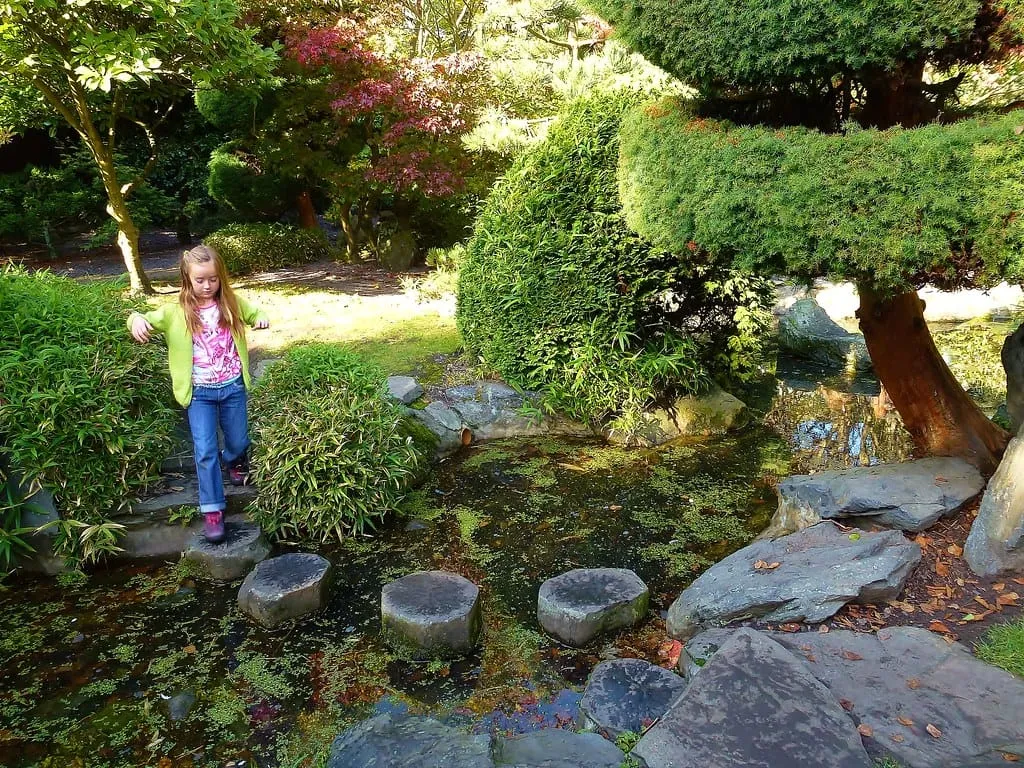
Liverpool City Council currently describes it as a 94-acre park containing woodland, a lake, fields and Japanese and old English gardens.
There is also a children's playground and bowling greens.
The Allerton Oak
The Allerton Oak stands near the centre of the park.
The tree is generally estimated to be around 1,000 years old. Whatever the precise age, it long predates the surrounding park.
It has become one of Calderstones' most recognisable features and can be incorporated into a walk between the lake, formal gardens and Mansion House.
The Calder Stones are considerably older
The name Calderstones comes from something much older than the park.
The Calder Stones are six surviving sandstone megaliths associated with a Neolithic burial monument.
They have been moved several times for protection and are now housed close to the Mansion House rather than standing exposed in the park.
If seeing them is the main reason for your visit, check current access arrangements before travelling.
The Mansion House and The Reader
The Mansion House is occupied by reading charity The Reader.
Its Calderstones operation includes the Reader Café, events and activities, while the Storybarn runs children's literature-based sessions.
Do not assume the buildings follow the same opening hours as the surrounding park. Check The Reader directly before making the Mansion House the centre of a visit.
For walkers and runners, Liverpool City Council also publishes a 3km Calderstones Park route.
Stanley Park: formal gardens between two football grounds
Stanley Park covers 111 acres in north Liverpool.
Across Stanley Park towards Anfield. Photo: Anthony Parkes (CC BY-SA 2.0) via Wikimedia Commons.
It opened in 1870 and was designed by landscape architect Edward Kemp, who was also responsible for Newsham Park.
Unlike Sefton Park's broad landscape, Stanley has strong formal elements. Its terraces, gardens, lake and architectural features make the central section feel quite different from the open playing areas.
Liverpool City Council has created a 3km Stanley Park walking and running route.
It was originally constructed in the Victorian period and was restored as part of the regeneration of Stanley Park.
There is an important practical distinction between this and Sefton Park Palm House.
The Isla Gladstone is primarily an events and wedding venue. It should not be treated as a public glasshouse that visitors can automatically enter.
The surrounding park remains open.
Football changes Stanley Park completely
Stanley Park sits between Anfield and Goodison Park, Everton's former home.
That geography has defined how thousands of people encounter the park.
On an ordinary weekday it can be relatively quiet. Around major football events, the roads, public transport and pedestrian routes around the park can be considerably busier.
Everton Park is different from the Victorian parks further south.
Its main feature is the height.
The park occupies elevated ground above the city centre, giving wide views over central Liverpool, the docks, the Mersey and towards the Wirral. Visibility beyond that depends heavily on the weather.
Liverpool City Council publishes a 3km walking and running route through Everton Park.
The landscape is relatively recent. Much of the present park was created during the 1980s following extensive clearance of the dense housing that once occupied the hillside.
That history explains why it feels so different from Sefton, Princes or Stanley Park.
There are fewer ornamental features. The space and elevation are the point.
Walking up from the city centre
Everton Park looks close to the city centre on a map because it is.
What the map does not show particularly well is the climb.
Walking from the city centre means gaining a noticeable amount of height. That is useful to know if travelling with young children, pushing a buggy or if steep gradients are difficult.
The exposed position also means conditions can feel noticeably colder or windier than down in the city centre.
Princes Park: where Paxton tested ideas that travelled much further
Princes Park opened in 1842 and is one of the most historically important landscapes in Liverpool.
Joseph Paxton designed the park, with James Pennethorne responsible for architectural elements.
That makes its layout particularly useful if you are interested in how public parks developed during the Victorian period.
Paxton subsequently designed Birkenhead Park, whose layout became influential far beyond Merseyside.
Princes Park is now registered Grade II* on the National Heritage List for England.
What is there
The park is built around a large lake and curving paths, with open grassland and mature trees.
There are also playgrounds and sporting areas.
It is less commercially developed than Sefton Park next door. There is no equivalent of the Palm House or Calderstones Mansion House to structure a visit around.
That is part of the distinction between the two neighbouring parks.
If you want facilities, cafés and a longer circuit, Sefton has more of them.
If you want to understand the origins of Liverpool's Victorian park movement, Princes Park tells the earlier part of that story.
Lodge Lane and the surrounding streets provide food options nearby.
Newsham Park: 121 acres, two lakes and a historic landscape at risk
Newsham Park covers 121 acres between Tuebrook, Fairfield and Kensington.
Work began in 1865 to a design by Edward Kemp and the park opened in 1868.
It contains broad paths, mature trees, lakes and recreational facilities including an action-sports area.
The park is Grade II registered.
Newsham Park remains on the Heritage at Risk Register
There is an important distinction between Newsham and several of Liverpool's better-restored Victorian parks.
Historic England currently includes the Newsham Park Conservation Area on its Heritage at Risk Register.
Its current assessment records the conservation area as being in poor condition, with medium vulnerability and no significant change in its condition trend.
That does not mean the park is closed.
It means the condition of its historic landscape and structures remains a conservation concern.
You can still walk around the park, use its recreational facilities and visit the lakes.
Fishing at Newsham Park
Newsham is also one of several Liverpool parks where fishing is permitted under the council's angling system.
Liverpool City Council requires anglers to have both the appropriate Environment Agency rod licence and a council permit.
The council does not stock its park lakes as fisheries. They are ornamental lakes that also provide wildlife habitat.
Walton Hall Park: open space, sport and a playground
Walton Hall Park deserves inclusion in any broad guide to Liverpool's larger parks.
Liverpool City Council describes it as a 130-acre park, putting it among the city's largest public green spaces.
Its character is quite different from Sefton or Calderstones.
This is predominantly a recreational park rather than somewhere built around ornamental gardens and historic buildings.
There is a lake, children's playground, sports pitches and substantial open grass.
The park also contains bowling greens.
That makes Walton Hall Park particularly useful when the purpose of the trip is playing, exercising or simply having a large amount of open ground rather than looking around formal gardens.
Reynolds Park: a smaller park built around its gardens
Reynolds Park in Woolton is only about 14 acres.
Its size is part of its usefulness.
You do not need an afternoon to see it.
The park includes a walled garden, sunken garden, arboretum and areas of more open planting. It works particularly well for a short walk when you are already in Woolton.
Dogs are prohibited from the walled garden under Liverpool City Council's public-space rules.
Woolton Village is close enough to combine with the park without needing to drive between the two.
Calderstones is also nearby, making it possible to visit both parks during the same longer walk or afternoon.
Wavertree Playground: the Mystery
Wavertree Playground is better known locally as the Mystery.
It does not resemble Liverpool's ornamental Victorian parks.
This is predominantly recreational ground used for running, football and organised sport.
Its history is responsible for the unusual name.
The land was given to Liverpool by an anonymous donor, whose identity was kept secret. The uncertainty surrounding the donor became attached to the site and the nickname survived.
Today, the Mystery earns its place for one reason: space.
If you want landscaped gardens and lakes, go elsewhere. If you need a large area for exercise or organised sport, its purpose becomes much clearer.
St James Gardens: a former cemetery beneath Liverpool Cathedral
St James Gardens gives you something none of the larger parks can.
It sits directly beneath Liverpool Cathedral, within walking distance of the city centre.
The gardens occupy a former stone quarry that later became a cemetery.
That history is still visible in the landscape. Paths run below surrounding street level, with high exposed rock faces and surviving gravestones around the site.
It is not somewhere you need to set aside half a day for.
Instead, it works as part of a walk around the Georgian Quarter, Hope Street and the cathedral, which our Liverpool heritage trail covers.
Some paths slope and surfaces can be uneven, which is relevant for anyone with limited mobility.
Otterspool Promenade: choose this when you want the Mersey
Otterspool does not fit neatly into the same category as Liverpool's Victorian parks.
The attraction here is the river.
The promenade follows the Mersey through south Liverpool and forms part of a much longer walking and cycling route towards the city centre.
There is adjoining parkland, children's facilities and large areas of open ground, but the waterfront is what distinguishes it.
It is particularly exposed in poor weather. Wind off the Mersey can make conditions very different from those a few streets inland.
There are council car parks around Otterspool and Mersey Road, while Aigburth station provides the nearest Merseyrail connection.
Which Liverpool parks have playgrounds?
Liverpool City Council currently lists children's play areas at several of the parks in this guide, including:
Sefton Park
Calderstones Park
Stanley Park
Princes Park
Newsham Park
Walton Hall Park
The council also lists playgrounds at Croxteth Country Park, Greenbank Park, Springfield Park and several smaller parks.
Play equipment and individual sections can close for maintenance, so check council notices if the playground is the main reason for travelling.
Where can you fish in Liverpool parks?
Liverpool City Council currently permits angling, subject to its permit system, at lakes in:
Calderstones Park
Greenbank Park
Larkhill Gardens
Newsham Park
Princes Park
Sefton Park
Stanley Park
Walton Hall Park
You need both the appropriate Environment Agency rod licence and the council's permission.
Some areas of individual lakes are excluded to protect wildlife and habitat.
Taking a dog to a Liverpool park
Dogs can be taken into many Liverpool parks, but that does not mean they can go everywhere inside them.
Liverpool City Council prohibits dogs from several types of space, including:
enclosed playgrounds
skateparks
enclosed picnic areas
sports pitches
tennis and basketball courts
multi-use games areas
park lakes and ponds
several formal and walled gardens
Named restricted gardens include areas within Sefton Park, Calderstones, Greenbank Park, Croxteth Park and Reynolds Park.
Dogs are allowed on paths around many park lakes unless signs say otherwise.
Check the current council rules rather than assuming the whole park follows one rule.
Four official 3km park routes
Liverpool City Council publishes mapped 3km walking and running routes for:
Sefton Park: a circuit taking in the lake, Palm House and central landscape.
Calderstones Park: a route through the park's woodland and gardens.
Stanley Park: a route through its formal and recreational areas.
Everton Park: a hillier route with views over Liverpool and the Mersey.
These are useful if you want a defined distance rather than simply wandering around. The routes sit in the council's parks and greenspaces section.
Large events can change how a park works
Several Liverpool parks double as event spaces.
That matters most at Sefton Park, Stanley Park and Newsham Park.
Temporary fencing, road restrictions, event infrastructure and parking controls can substantially change how much of a park is accessible.
Stanley Park is also affected by football crowds around Anfield, while major events occasionally use Newsham Park.
If you are making a special journey, check both the council and current event listings before travelling.
Park buildings have their own opening hours
A park being open does not mean everything inside it is open.
This is particularly relevant at:
Sefton Park Palm House: operates its own visitor and events timetable.
Calderstones Mansion House: The Reader operates the building, café and activities.
Isla Gladstone Conservatory: primarily operates as a private events venue.
Calder Stones: access arrangements depend on the building housing them.
Check the individual venue if one of these is the main reason for your visit.
Other Liverpool parks
This guide concentrates on parks that offer something beyond their immediate neighbourhood, but Liverpool has many more public green spaces.
They include Croxteth Country Park, Springfield Park, Greenbank Park, Allerton Towers, Woolton Woods, Camp Hill, Clarkes Gardens, Doric Park, Belle Vale Park, Larkhill Gardens and Wavertree Botanic Gardens.
Some are substantial destinations in their own right.
Croxteth Country Park in particular is different enough to justify a separate guide, because the wider site includes Croxteth Hall, extensive parkland and other visitor facilities. Ours is the Croxteth Hall and Country Park guide.
Check individual building hours if you are going specifically for the Palm House, Mansion House or another indoor attraction.
For dogs, remember that individual sections of a park can have different restrictions.
Fishing requires permits.
Large events can temporarily change access.
And if all you need is a walk, Liverpool City Council's official 3km routes at Sefton, Calderstones, Stanley and Everton Park give you four straightforward starting points.